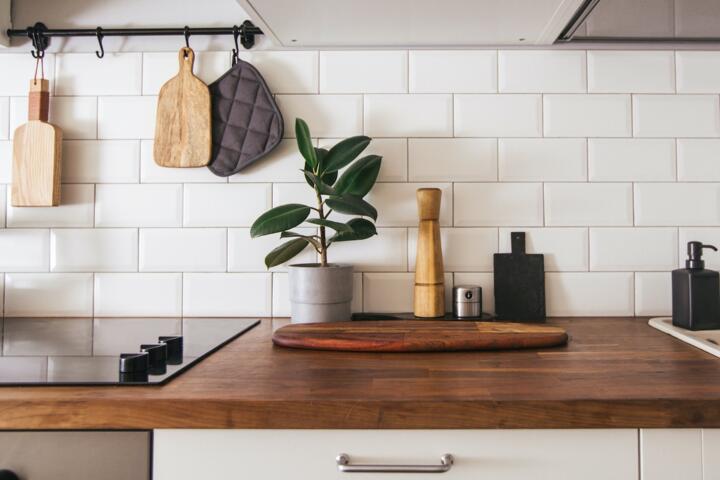
The Essential Core
The minimalist kitchen isn't about deprivation; it is about maximum utility per square inch. A professional chef doesn't reach for a garlic press or a strawberry huller; they reach for a versatile blade. The concept of "Mise en Place" becomes significantly easier when your environment isn't fighting you for space.
Consider the professional kitchen at a Michelin-starred restaurant like Le Bernardin. The "line" is remarkably sparse, containing only the specific vessels and tools needed for the service. In domestic settings, data from the Association of Home Appliance Manufacturers (AHAM) suggests that the average household owns over 30 specialized kitchen tools, yet uses fewer than 8 on a weekly basis.
Practically, this means replacing the 15-piece knife block with three targeted blades. It means swapping a stack of non-stick pans for one well-seasoned carbon steel skillet. When you reduce the noise, you increase your focus on heat control and ingredient quality.
Inventory Overload
The primary mistake home cooks make is falling for "unitaskers"—tools that perform only one function. These items, popularized by late-night infomercials and aggressive retail marketing, consume 40% of average drawer space while contributing to less than 2% of meal preparation tasks. This clutter creates a psychological barrier to cooking, making the process feel chaotic and the cleanup daunting.
When a kitchen is overstuffed, air circulation decreases in storage areas, and finding a specific lid becomes a source of friction. I have seen kitchens where $2,000 worth of specialty gadgets sat idle while the owner struggled with a dull, $10 grocery-store knife. This imbalance leads to poor technique, as specialized tools often mask a lack of fundamental skill, like manual chopping or temperature management.
The consequence is "decision fatigue." Faced with ten different pans, the cook chooses the most convenient one rather than the most effective one. This leads to uneven searing, crowded steaming, and ultimately, inferior food quality. A cluttered kitchen is a stagnant kitchen.
Strategic Selections
To transition to a high-utility kitchen, focus on the "Great Eight" categories. These are the tools that handle the heavy lifting across all cuisines and techniques. Investing here allows you to ignore the seasonal trends and gimmick products that flood the market.
The Triple-Blade System
You only need three knives: an 8-inch Chef’s knife, a serrated bread knife, and a paring knife. A Wüsthof Classic or a Shun Classic 8-inch blade can handle everything from dicing onions to breaking down a chicken. The serrated knife is for tomatoes and crusty bread, while the paring knife handles delicate tasks like peeling. Avoid the 20-piece sets; you are paying for filler steel.
Heat-Conductive Vessels
Ditch the 10-piece Teflon set. You need one 12-inch Lodge cast iron skillet and one 3-quart stainless steel saucier from All-Clad. Cast iron provides the thermal mass needed for searing, while a saucier's curved sides make whisking and reduction much easier than a traditional straight-sided saucepan. These two items will last several lifetimes if maintained.
The Enameled Workhorse
A 5.5-quart enameled cast iron Dutch oven, such as those from Le Creuset or Staub, is the most versatile pot in existence. It works for braising, boiling pasta, baking sourdough bread, and deep-frying. Its ability to transition from stovetop to oven makes it indispensable for complex flavor development through slow cooking.
Precision Measurement Tools
Minimalism rewards accuracy. Instead of a nest of measuring cups, use a digital scale like the Oxo Good Grips. Weighing ingredients is 20% faster and 100% more accurate than volume measurement, especially in baking. For liquids, a single 2-cup Pyrex glass jug is sufficient. Pair this with an instant-read thermometer (like the Thermapen) to eliminate guesswork in meat preparation.
High-Utility Prep Gear
Replace plastic cutting boards with a heavy edge-grain wood board from John Boos & Co. Wood is easier on your knife edges and has natural antimicrobial properties. Add a single stainless steel mixing bowl, a microplane for zesting/grating, and a pair of high-tension locking tongs. This lean setup handles prep for a salad just as easily as a four-course dinner.
Efficiency Case Studies
A culinary consulting firm, Kitchen Theory, conducted a study with a family of four who complained of "cooking burnout." Their kitchen contained 142 individual items. By removing 100 of these and upgrading the remaining 42 to professional-grade basics, the family reported a 25% reduction in total meal prep time and a 30% reduction in cleanup time over a 60-day period.
In another instance, a small-footprint urban bistro in New York City optimized their "back of house" by removing all electric specialized choppers and replaces them with high-quality Victorinox knives. The result was a $400 monthly saving in electricity and maintenance costs, alongside an improvement in vegetable texture and "plate appeal" because manual cuts cause less cellular damage to produce than dull mechanical blades.
Tool Comparison
| Specialized Item | Minimalist Alternative | Utility Increase (%) |
|---|---|---|
| Garlic Press | Chef's Knife / Microplane | 300% |
| Rice Cooker | Heavy-bottomed Pot | 150% |
| Slow Cooker | Dutch Oven (Low Heat) | 200% |
| Electric Chopper | Sharp Chef's Knife | 400% |
| Measuring Cups | Digital Scale | 500% |
Common Pitfalls
The most common error is buying "starter sets." These sets are designed for retail margins, not for the cook. They often include sizes you will never use. Always buy "open stock," selecting each piece individually based on its weight and balance. Another mistake is keeping "duplicates" for when guests arrive. It is better to have one large, high-quality pot than three mediocre ones of the same size.
Avoid the "gift trap." Many people accumulate tools as gifts. If you haven't used a gifted crème brûlée torch in six months, it is occupying mental and physical space that could be used for actual cooking. Be ruthless in your curation. If a tool doesn't serve at least three distinct purposes, it should be scrutinized.
FAQ
Can I bake without a stand mixer?
Yes. A sturdy bowl and a wooden spoon (or your hands) can handle almost any dough or batter. While a KitchenAid is a luxury, it is only a "requirement" for high-volume production or specific emulsifications like marshmallows.
Is non-stick worth keeping at all?
Keep one 8-inch non-stick skillet exclusively for eggs. Use it for nothing else to preserve the coating. For everything else, stainless steel or carbon steel is superior for browning and longevity.
How do I handle "gifted" kitchen gadgets?
If the tool doesn't fit your workflow, donate it. A minimalist kitchen relies on every tool being an "extension of the hand." If you don't enjoy using it, you won't use it well.
Do I really need a digital scale?
If you want consistent results, yes. Measuring flour by volume can vary by up to 20% depending on how packed it is. A scale removes this variable entirely, leading to fewer failed recipes.
Is wood or plastic better for cutting boards?
High-quality wood (maple or walnut) is better for your knives and hygiene. Plastic boards develop deep grooves that harbor bacteria and are harder to truly sanitize over time compared to the capillary action of wood.
Author’s Insight
I spent years believing that my mediocre cooking was a result of not having the "right" gadget. The moment I cleared my counters and invested in a single, high-quality Japanese petty knife and a heavy cast iron skillet, my technique transformed. I realized that when you have fewer tools, you learn to master the ones you have. My best advice: spend your money on ingredients and a knife sharpener, not on plastic gadgets that promise to save you five minutes of dicing.
Summary
Transitioning to a minimalist kitchen is a process of intentional subtraction. By auditing your current inventory and replacing high-volume, low-utility items with professional-grade essentials like a Dutch oven, a digital scale, and a primary chef's knife, you create an environment conducive to culinary growth. Start by boxing up your rarely used gadgets for 30 days; if you don't miss them, donate them. Focus on quality over quantity, and your cooking will naturally follow suit.