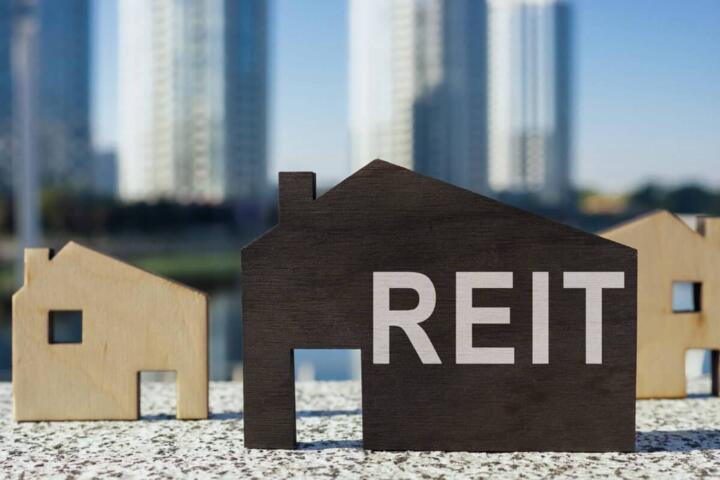
REITs And Rental Property
Real estate income can come from owning shares in a real estate investment trust (REIT) or from owning physical property directly. REITs typically earn rent from properties and pass a large share of taxable income to shareholders, while physical owners collect rent, pay operating costs, and manage tenants and repairs. Both paths can produce cash flow, but the timing and volatility differ because REITs trade daily and physical properties reprice through sales and refinancing rather than intraday.
A practical example: if a small apartment building collects $1,800 per month per unit and vacancy runs higher than expected, the landlord’s cash flow drops immediately. In a REIT, the same kind of rent pressure shows up through property-level performance, then through the REIT’s reported funds from operations and dividend decisions, and the share price may move before the next earnings report.
Another difference is how “passive” is defined. Buying a REIT through a brokerage account usually requires less ongoing work than being a landlord, yet you still face market risk, dividend policy risk, and the possibility that the REIT’s leverage changes over time. Owning physical real estate can be passive only after you have systems for maintenance, leasing, insurance, and local compliance—often with a property manager, which changes the economics.
Common Passive Income Mistakes
People often treat REIT dividends as guaranteed rent-like income. Many REITs distribute dividends based on taxable income and funds from operations, which can diverge from net income and can be affected by depreciation, property sales, and non-cash items. Dividend cuts happen when cash flow weakens, when refinancing costs rise, or when management prioritizes debt reduction over distributions.
Physical real estate also gets oversimplified. Rent is not the same as profit because operating expenses, capital expenditures, and vacancy can be large and lumpy. A roof replacement or HVAC replacement can arrive in a year when rent collections look fine, and the cash flow that felt “passive” turns into a cash call. Even with a property manager, owners still bear the risk of major repairs and local market downturns.
Both approaches depend on supporting technologies and processes that investors rarely track. For REITs, underwriting models, property management systems, leasing pipelines, and debt servicing schedules shape performance. For physical property, screening criteria, maintenance ticketing, rent collection workflows, and local permitting processes determine how quickly problems get fixed. When those systems fail—late rent, slow repairs, poor tenant screening—the income story changes.
Liquidity is another dependency. REIT shares trade on exchanges, so you can exit quickly, but that also means you can buy and sell at prices that reflect interest rates and risk appetite rather than the property’s current cash flow. Physical property offers less liquidity, so “passive” can turn into “stuck” during a downturn when selling costs and buyer demand are unfavorable.
How To Compare Income Streams
Model Cash Flow With Real Costs
For physical property, start with gross rent minus vacancy and credit loss assumptions, then subtract recurring expenses such as property taxes, insurance, utilities paid by the owner, routine maintenance, and property management fees. Add a capital expenditure allowance for replacements that do not happen every year, like appliances or major systems. A common planning approach is to use a percentage of rent for capex and then adjust based on the property’s age and recent work history.
For REITs, compare dividend yield with payout sustainability metrics reported by the company, such as funds from operations (FFO) or adjusted funds from operations (AFFO), when available. Dividend yield alone can mislead because it ignores whether the REIT is growing cash flow, selling assets, or taking on new debt. If you see a high yield paired with declining occupancy or rising leverage, the “income” may be funded by asset sales or balance-sheet risk.
As a small aside, some REITs report metrics with different definitions, and the labels can vary by company. Reading the footnotes in the quarterly earnings release matters more than trusting a single number on a screen.
Stress-Test Rates And Vacancy
Interest rates affect both paths, but through different channels. REITs often carry debt at varying maturities and interest-rate structures, so refinancing at higher rates can compress cash flow and reduce distributions. Physical owners can face higher mortgage rates when refinancing, and even without refinancing, higher rates can reduce buyer demand and cap rates, affecting sale proceeds.
Vacancy stress tests should be explicit. For physical property, run scenarios such as 3%, 7%, and 10% vacancy and include the time to re-lease. For REITs, look for segment-level occupancy trends and lease expirations, because a REIT with many leases rolling soon may face faster rent resets. If the REIT’s properties are concentrated in one region, local economic shocks can show up quickly.
On a practical level, a spreadsheet with 5–10 assumptions beats a single “expected return” number. I often see investors skip the downside case, then panic when the first quarter’s results differ from their mental model.
Check Fees, Taxes, And Liquidity
REITs involve brokerage commissions (usually small), bid-ask spreads, and ongoing fund-level expenses embedded in the trust’s operations. Physical property involves closing costs, ongoing property taxes, insurance, maintenance, and management fees if you outsource. Transaction costs matter because they affect how quickly you can rebalance or exit.
Taxes differ by structure and account type. In the U.S., REIT dividends are often taxed as ordinary income for many investors, though some portions may be eligible for qualified business income treatment under current rules. Physical rental income is taxed based on your tax bracket, and deductions may include depreciation, subject to tax rules and limitations. Tax treatment varies by country and by investor situation, so readers should confirm details with current tax guidance rather than relying on generic summaries.
Liquidity is a real trade-off. REITs can be sold quickly, but the price can drop during market stress. Physical property can be sold, but the process can take months and may require repairs, tenant coordination, and financing approvals.
Match Time And Control To Your Goals
Passive income expectations should match the level of control you want. Physical ownership gives control over tenant selection, rent strategy, and capital improvements, but it also creates operational work. Hiring a property manager reduces day-to-day tasks, yet you still choose the manager, review reports, and fund major repairs.
REIT ownership reduces operational control, but you still influence outcomes indirectly through your choice of REIT type, geography, and leverage profile. Some REITs focus on residential, industrial, office, or data centers, and each segment has different demand drivers and lease structures. A REIT concentrated in a segment with weaker fundamentals can cut dividends even if the overall real estate market looks stable.
If you want minimal involvement, REITs often fit better. If you want to manage risk through property selection and improvement plans, physical ownership can fit, though the “passive” label becomes accurate only after systems are in place.
Educational Case Examples
Scenario A: A salaried investor with $25,000 available chooses between buying a small REIT index fund and buying a single rental property in a distant metro. The investor values liquidity and does not want to coordinate repairs. The REIT option provides daily liquidity and diversified exposure, but the investor accepts that dividend yield can change with market pricing and that ordinary-income tax treatment may apply. The rental property option could produce higher cash flow in a strong rental market, yet the investor would likely pay a property manager, cover capex surprises, and face higher transaction costs if they need to sell.
Scenario B: A homeowner with $150,000 equity considers adding a second property versus buying a REIT focused on industrial warehouses. The homeowner can handle some oversight and wants control over improvements, but they also want to avoid concentrated risk. The second property may offer direct control and potential tax deductions tied to depreciation, while the industrial REIT may offer diversification across multiple properties and tenants. In both cases, the homeowner runs a stress test for vacancy and rate changes, then compares net cash flow after expenses and expected taxes, rather than comparing gross rent to dividend yield.
REIT Vs Physical Checklist
| Decision Factor | REIT Shares | Physical Rental | What To Check |
|---|---|---|---|
| Cash Flow Source | Property rent passed through trust | Tenant rent minus expenses | FFO/AFFO trends vs dividend; capex plan |
| Liquidity | Sell quickly during market hours | Sell slowly; transaction costs | Exit timeline and cost assumptions |
| Rate Sensitivity | Refinancing and valuation impact | Mortgage/refi and cap-rate impact | Debt maturity schedule; capex needs |
| Operational Work | Low day-to-day involvement | Leasing, repairs, compliance | Manager contract terms; reporting cadence |
| Concentration Risk | Depends on REIT sector/geography | Often single-property exposure | Tenant mix; local demand indicators |
| Tax Treatment | REIT dividends often taxed as ordinary income | Rental income and depreciation rules | Use current tax guidance for your jurisdiction |
Step-by-step checklist: (1) Estimate net cash flow after expenses and expected taxes, not just gross rent or dividend yield. (2) Stress vacancy and rate changes using at least three scenarios. (3) Compare exit costs and your time horizon. (4) Review leverage and debt maturity for REITs, then review property condition and capex for physical assets. (5) Decide whether you want operational control or market liquidity.
Common Mistakes To Avoid
One mistake is treating “passive” as “risk-free.” REITs can cut dividends, and share prices can drop even when underlying properties still generate rent. Physical properties can face tenant turnover, delayed repairs, and unexpected capital expenditures that reduce cash flow.
Another mistake is using a single metric without context. A dividend yield can look attractive while the payout ratio worsens, and a rental property can look profitable on paper while capex reserves are ignored. A quick check is to compare cash flow after expenses to the distribution or to the owner’s expected out-of-pocket costs.
Investors also underestimate data quality. REIT disclosures vary in how they describe occupancy, lease terms, and rent growth assumptions, and physical property numbers depend on accurate rent rolls and maintenance records. If you rely on a property listing without verifying expenses, you may end up modeling the wrong baseline.
Finally, people sometimes skip account-level constraints. For example, a brokerage account versus a retirement account can change tax outcomes, and the choice affects after-tax income. I once saw an investor compare two options using pre-tax numbers only, then discover the after-tax difference after filing—an avoidable mismatch, especially when the tax rules change.
FAQ
Do REIT Dividends Match Rent?
REIT dividends often relate to property cash flow, but they are not identical to rent collected. Dividends depend on the REIT’s accounting, payout policy, debt costs, and whether management retains cash for capex or debt reduction.
Which Option Has More Liquidity?
REIT shares are generally more liquid because they trade on exchanges during market hours. Physical property sales typically take months and involve transaction costs, so exit timing is less predictable.
How Do Taxes Differ For Income?
In the U.S., REIT dividends are commonly taxed as ordinary income for many investors, while rental income is taxed with deductions and depreciation rules. Tax treatment varies by jurisdiction and account type, so current guidance matters.
What Risks Affect Passive Income?
REIT risks include share-price volatility, dividend policy changes, and leverage/refinancing risk. Physical property risks include vacancy, tenant credit issues, maintenance surprises, and local market downturns.
How Should I Compare Returns?
Compare net cash flow after expenses and realistic taxes, then add a scenario-based view of price risk and exit costs. For REITs, review FFO/AFFO trends and leverage; for physical property, review capex needs and operating expense history.
Author's Insight
Passive income from real estate depends on cash flow after costs, not on headline yield or rent. REITs convert property-level performance into tradable securities, so market pricing and leverage can dominate short-term results even when rents are stable. Physical rentals can be cash-flow attractive, but capex timing and vacancy risk often determine whether the income stays “passive.” A careful comparison uses scenario modeling, reads the REIT’s disclosures for leverage and occupancy, and checks property condition and expense history before assuming steady rent.
Key Takeaways
REITs tend to fit investors who want liquidity and less operational work, while physical rentals fit investors who want direct control and can manage or fund operations and repairs. Dividend yield and gross rent both mislead when they ignore vacancy, expenses, capex, taxes, and leverage. A decision improves when you model net cash flow under multiple downside scenarios and plan for an exit timeline that matches your needs.