The Value Paradigm
Quality of life is often misinterpreted as luxury. In a professional context, it represents the synergy between purchasing power, safety, and public services. For instance, while London offers high salaries, the "disposable income ratio" is often lower than in cities like Valencia or Tallinn. When we look at the 2026 Numbeo Cost of Living Index, several mid-sized European cities consistently outperform global capitals in "Purchasing Power" metrics.
A practical example is the "Coffee and Commute" test. In Zurich, a latte and a 5km transit trip might cost $12. In Porto or Wroclaw, the same utility costs roughly $4.50, yet the digital infrastructure and safety ratings remain comparable. Real data shows that cities with a population between 300,000 and 800,000 often provide the best ROI for residents, maintaining short commute times while hosting international airports.
Current statistics indicate that a household can live comfortably in Southern or Eastern Europe on a budget of €2,500 per month, a figure that wouldn't cover rent alone in San Francisco or Manhattan. This isn't just about saving money; it's about reclaiming time and reducing the stress associated with high-pressure financial environments.
Common Relocation Errors
Many individuals fail to account for "hidden local costs," such as health insurance mandates or progressive tax brackets that activate at relatively low thresholds. A common mistake is choosing a city based solely on cheap rent (like certain rural parts of Italy) only to realize that the lack of fiber-optic internet or English-speaking medical staff creates a secondary "efficiency tax."
Importance lies in the long-term sustainability of the move. If you relocate to a low-cost city with poor air quality or failing public transport, the initial savings are quickly offset by private healthcare costs or the necessity of owning a car. We see this in "digital nomad" hotspots where short-term popularity spikes local prices, leaving latecomers with the bill but none of the original charm.
Real-world consequences include social isolation and bureaucratic burnout. Without a localized strategy, expats often end up in "foreigner bubbles," paying 30% more for everything from groceries to utilities. Failing to research the local tax residency rules (such as the 183-day rule in the EU) can lead to double taxation, effectively erasing the financial benefits of the lower cost of living.
Strategic City Choice
Valencia: The Mediterranean Balance
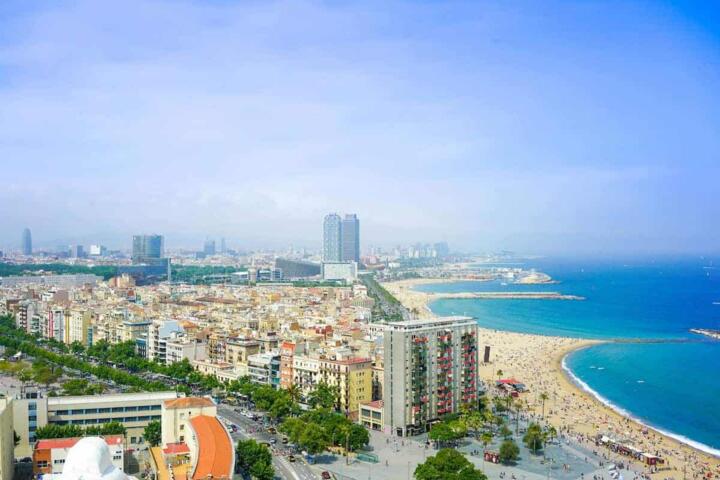
Valencia offers a rare combination of coastal beauty and high-tier infrastructure. It works because it maintains a "village feel" within a major metropolitan area. On average, rent for a 1-bedroom apartment in the city center is approximately 45% lower than in Madrid or Barcelona, yet the city boasts the Turia Park—a 9km green lung—and world-class healthcare through the Conselleria de Sanitat.
Porto: Tech Hub with Soul
Portugal’s second city has become a magnet for tech talent. Using services like Idealista, you can find renovated apartments for €900, significantly less than Lisbon’s €1,500 average. The city is highly walkable, and the Andante transit system is both cheap and efficient. It is an ideal spot for those who value historic aesthetics alongside modern coworking spaces like Selina Navis.
Wroclaw: Hidden Power
Poland’s "City of Bridges" offers one of the highest safety-to-cost ratios in Europe. With a massive student population and a booming IT sector (home to offices for Google and Nokia), the city feels vibrant and young. Monthly expenses for a single person, excluding rent, hover around €700. The local MPK Wroclaw transport system is highly reliable, making car ownership unnecessary.
Tallinn: Digital Living
Estonia’s capital is the gold standard for administrative efficiency. Through the e-Residency program and fully digital government services, you can handle taxes and business registrations in minutes. While grocery prices have risen, the "time saved" via digital bureaucracy is a massive hidden dividend. Public transport is free for registered residents, a perk that saves roughly €500 annually.
Ljubljana: Green Heaven
Slovenia’s capital is perfect for those prioritizing environment and safety. It is one of the few European capitals where you can reach the Alps or the Adriatic Sea in under an hour. The city center is car-free, and the Urbana card makes accessing services seamless. It’s a low-inflation environment compared to its neighbor, Austria, providing a similar Alpine lifestyle at a 30% discount.
Real-World Success
Case Study 1: The Remote Design Agency
A boutique design agency based in London was spending £6,000/month on a small Soho office. In 2024, they transitioned to a "hub and spoke" model, opening a primary office in Tallinn, Estonia. By utilizing the e-Residency portal and local talent, they reduced operational overhead by 40%. The employees moved to Tallinn, where their average rent dropped from £1,800 for a room to €850 for a full apartment, increasing staff retention by 25%.
Case Study 2: The Freelance Consultant
An American consultant relocated from Seattle to Valencia, Spain using the Digital Nomad Visa. In Seattle, monthly expenses were $5,500. In Valencia, using Glovo for affordable deliveries and BiciVLC for transport, costs dropped to $2,400. The consultant reported a 15% increase in productivity due to the lack of "financial noise" and improved work-life balance provided by the local siesta culture and outdoor lifestyle.
Cost of Living Data
| City | Rent (1-BR Center) | Monthly Utilities | Internet (Fiber) | Local Transport Pass |
|---|---|---|---|---|
| Valencia, ES | €950 | €140 | €30 | €35 |
| Porto, PT | €900 | €110 | €35 | €40 |
| Wroclaw, PL | €750 | €180 | €15 | €25 |
| Tallinn, EE | €700 | €210 | €25 | Free* |
| Ljubljana, SI | €850 | €190 | €30 | €37 |
Avoiding Key Pitfalls
One major error is ignoring the local "Bureaucracy Barrier." In Portugal, obtaining a NIF (tax number) or a SISS (social security number) can take months without a local lawyer or services like Bordr. Do not attempt to navigate these systems alone if you don't speak the language; the time lost is more expensive than the professional fee.
Another mistake is underestimating utility costs in Eastern Europe during winter. While rent in Wroclaw or Tallinn is low, heating bills in January and February can triple. Always ask for an "energy certificate" of the building before signing a lease. Use platforms like Spotahome or HousingAnywhere to verify listings and avoid the "expat tax" often applied by unscrupulous landlords on local classified sites.
Lastly, ensure your health insurance is compliant. For Spain, a Convenio Especial might be an option after one year, but initially, you need full private coverage with no co-payments for visa purposes. Companies like Sanitas or Adeslas offer specific expat packages that meet these legal requirements while staying under €100/month.
FAQ
Is English widely spoken in these cities?
In Tallinn and Wroclaw, English is the primary language of the tech and business sectors. In Valencia and Porto, you will need basic Spanish or Portuguese for government interactions, though younger generations and the service industry are generally proficient in English.
How do I handle taxes as a remote worker?
Most European countries require tax residency after 183 days. Spain offers the Beckham Law for some, while Portugal has transitioned from the NHR to a new "Tax Incentive for Scientific Research and Innovation." Always consult a cross-border tax specialist like KPMG or a specialized boutique firm.
What is the fastest internet available?
Tallinn and Wroclaw lead the pack with widely available 1Gbps fiber optics. Valencia and Porto also have excellent coverage in city centers, but older "Casco Antiguo" districts may sometimes be limited to slower ADSL connections due to historic building protections.
Are these cities safe for solo residents?
Statistically, Ljubljana and Wroclaw are among the safest cities in the world. Crime rates are significantly lower than in major US or UK metros. Standard urban precautions apply, but "no-go zones" are virtually non-existent in these specific mid-sized European hubs.
Can I find high-quality healthcare?
Yes. Slovenia and Estonia have high-performing public systems. Spain's healthcare is consistently ranked in the global top ten. However, as an expat, you will likely use private insurance to bypass wait times for elective procedures, which remains very affordable compared to US standards.
Author’s Insight
In my experience consulting for location-independent professionals, the "best" city is rarely the cheapest one. I’ve found that the psychological "sweet spot" is a city that feels like a 20% discount on your current lifestyle while offering a 50% increase in public safety and aesthetic beauty. Don't move just to save money; move to a place like Valencia or Ljubljana because the infrastructure supports your hobbies, whether that’s mountain biking or coastal photography. The financial upside is merely the catalyst for a better life, not the sole objective.
Summary
Achieving a high quality of life at a lower cost in Europe requires a shift from famous capitals to strategic secondary cities. Valencia, Porto, Wroclaw, Tallinn, and Ljubljana represent the best balance of modern infrastructure, safety, and fiscal sanity in 2026. To succeed, prioritize digital-ready cities, secure local legal assistance for residency, and always calculate your "total cost of living" including utilities and taxes. The most actionable step you can take today is to visit your top three choices for a "workation" to test the local rhythm before committing to a long-term lease.